Manners in Gion
Photographing geisha in Gion
How to photograph maiko and geiko in Gion without causing offence: what Kyoto Travel asks, where photos are prohibited and where cameras are welcome.
Book the one-hour geisha show ↗Quick answer
Leave geiko and maiko alone on Gion's streets: no stopping them, no touching, no following and no unauthorised photos or video. Photography is prohibited in parts of the district, including the Gion-machi South area. A booked show is the proper place for photographs: the one-hour ticket on this site says you are welcome to take pictures and videos.
What Kyoto Travel asks
Kyoto's tourism site lists nuisance behaviours that residents of Gion want visitors to avoid. The first concerns geiko and maiko seen walking around the district: visitors must not stop, touch or follow them, or photograph or film them without authorisation. The page says they are not mascot characters. Another Kyoto Travel page says stopping them on the street to ask for a photograph, or taking pictures without permission, is prohibited, and that posting photos of specific people online without permission violates their portrait rights.
Why a maiko in the street is in a hurry
Kyoto Travel explains that whenever you see a maiko out in her attire, she has an engagement to attend and is in a hurry. Stopping her costs her time and may make her late. Wikipedia adds that geisha have complained to the authorities about being pursued by groups of tourists keen to take their photograph, and that residents and businesses around Kyoto's hanamachi have launched patrols through Gion to stop it. The behaviour you want to avoid is the one that made those patrols necessary.
Where photography is prohibited
The tourist information centre says photographing maiko is prohibited in areas such as the Gion-machi South District, and that even where photography is allowed, asking for a handshake or a commemorative photo is considered a nuisance. Time Out Tokyo reported in 2019 that an association of local residents and shop owners forbade photography on private roads, while taking pictures on main roads such as Hanamikōji remained acceptable. Rules change, so follow the signs and flyers you see on the spot.
Smaller manners that matter
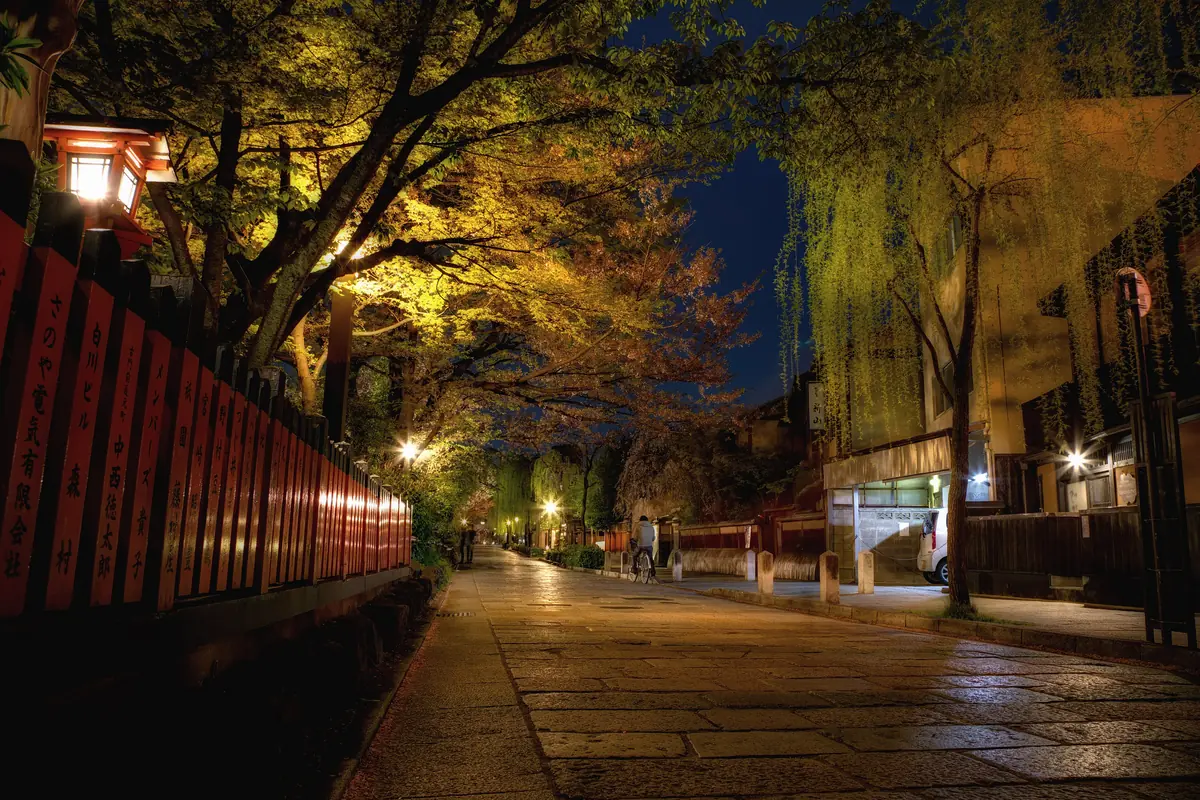
Kyoto Travel lists a few more. Avoid using a tripod to photograph the townscape, because it gets in the way of traffic. Do not touch the lanterns outside tea shops or lean against fences. The Gion manner page adds that the district is not a pedestrian-only street, so do not block the road or pavement by stopping to take photos, and do not make loud noises, which can seriously disturb residents.
The penalties it lists
The Gion manner message, written for Southern Gionmachi, states penalties for the worst behaviour: obstructing someone's path or stalking carries detention of less than 30 days or a fine under 10,000 yen, and pulling someone's hand or clothing carries up to six months' imprisonment or a fine up to 500,000 yen. Trespassing on temple, shrine or private property is also listed. A report by a resident may result in police being called. Treat these as the reason for the manners, not as a threat.
Where a camera is welcome
A booked appearance is the clean answer. The one-hour show's highlights say you are welcome to take pictures and videos, and the programme gives time for photographs with the maiko or geiko. Kyoto's tourist information centre also lists paid routes: ozashiki plans from restaurants and travel agencies, and a sightseeing bus course where you watch a maiko dance and take a commemorative photo. In each case the performer has agreed to be photographed, which a street encounter never guarantees.
Who this isn't for
Treat this as manners, not legal advice: the rules in Gion are set and enforced locally, so check signs and the current Kyoto Travel pages. It does not tell you how to get a better street photo of a maiko, because the better answer is not to try. If you want a photograph of someone in kimono, the show is the place, and a visitor in a rented kimono who has agreed to be photographed is a fair alternative.
Frequently asked questions
Can I photograph a maiko in Gion?
Not without permission. Kyoto Travel rules out stopping, touching or following a geiko or maiko, or photographing one without permission, and some areas prohibit photography.
Where is photography prohibited in Gion?
The tourist information centre names areas such as the Gion-machi South District. Signs and flyers on the street show current limits.
Can I post photos of geisha online?
Only with permission. Kyoto Travel says posting photos of specific individuals without permission violates their portrait rights.
Can I use a tripod?
Kyoto Travel asks visitors to avoid tripods for townscape photos, because they get in the way of traffic.
Where can I photograph a maiko legitimately?
At a booked show or other paid appearance. The one-hour show here says you are welcome to take pictures and videos.
Sources